
C'est Marseille, Bébé!

I have been wanting to visit Marseille for a long time, and finally, for my birthday, I went. Let’s be honest: Marseille is not for everyone. I think if you don’t like port cities, or if you don’t like Naples, Palermo, Catania, or Genoa, you won’t like Marseille either. It is raw and unpolished with an evident drug problem, but it is a vibrant city, full of contrasts and a true cultural melting pot.
The architecture swings wildly between decadent Parisian-style wrought-iron balconies and brutalist concrete apartment blocks, graffiti, and streets filled with plants growing out of random plastic buckets and pots lining the sidewalks.
The city has been shaped by strong migratory waves. First came the Corsicans, Armenians, and Italians (you will see a lot of pizza vans around!), followed in the ‘60s and ‘70s by many migrants from North Africa, particularly from Algeria and Tunisia. You will find tea rooms, mosques, hammams, the heavy scent of grilled meat, and Tunisian pastry shops.
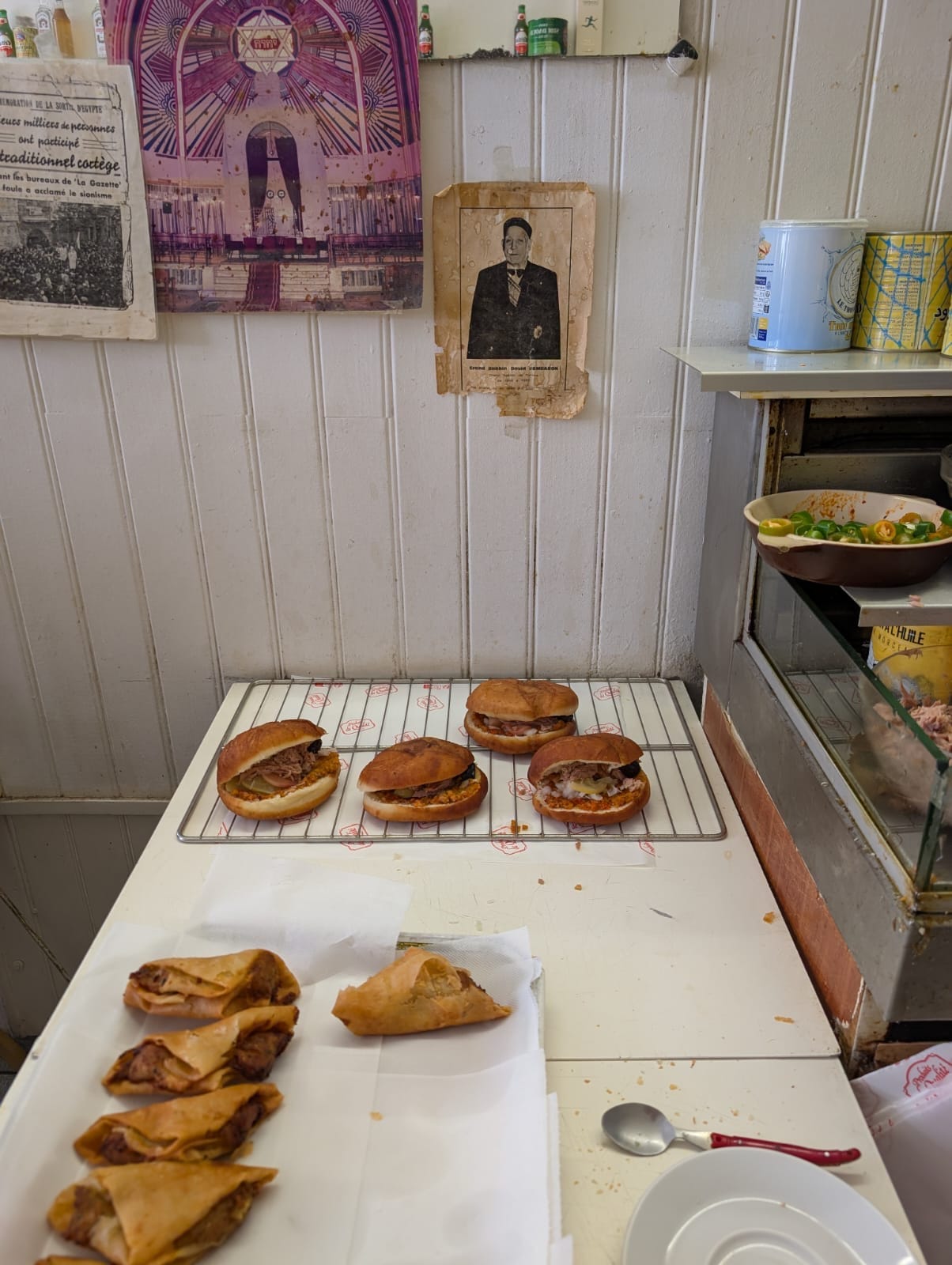
This métissage is visible everywhere, but especially in Noailles, the beating heart of Marseille. Here, you will see halal butchers with piles of fresh herbs, fishmongers, shops selling spices and beldi soap for the hammam, and the Marché des Capucins fruit and vegetable market, where women wearing the veil line up right next to French women carrying their wicker baskets.
But Noailles is also a neighbourhood with deep, recent wounds. On November 5, 2018, two buildings collapsed at numbers 63 and 65 on Rue d’Aubagne, claiming eight lives (including an Italian student). The collapse was driven by a mix of severe structural decay, landlord negligence, and administrative inaction. It was a tragedy that exposed the severe housing crisis in the city’s poorest areas. Following the disaster, authorities aggressively used a legal tool known as arrêté de péril imminent (imminent danger order) to forcibly evict over 4,500 people from unstable or neighbouring buildings. The tragedy sparked widespread protests against “slumlords,” real estate agencies, and public authorities. Shockingly, at the time of the collapse, the city had only two inspectors assigned to check the safety conditions of its housing stock.
In response to the neighbourhood’s precariousness, the non-profit organisation Bouillon de Noailles runs incredible initiatives centred around food and cooking to promote professional integration, share information, combat poverty, and run cultural projects.
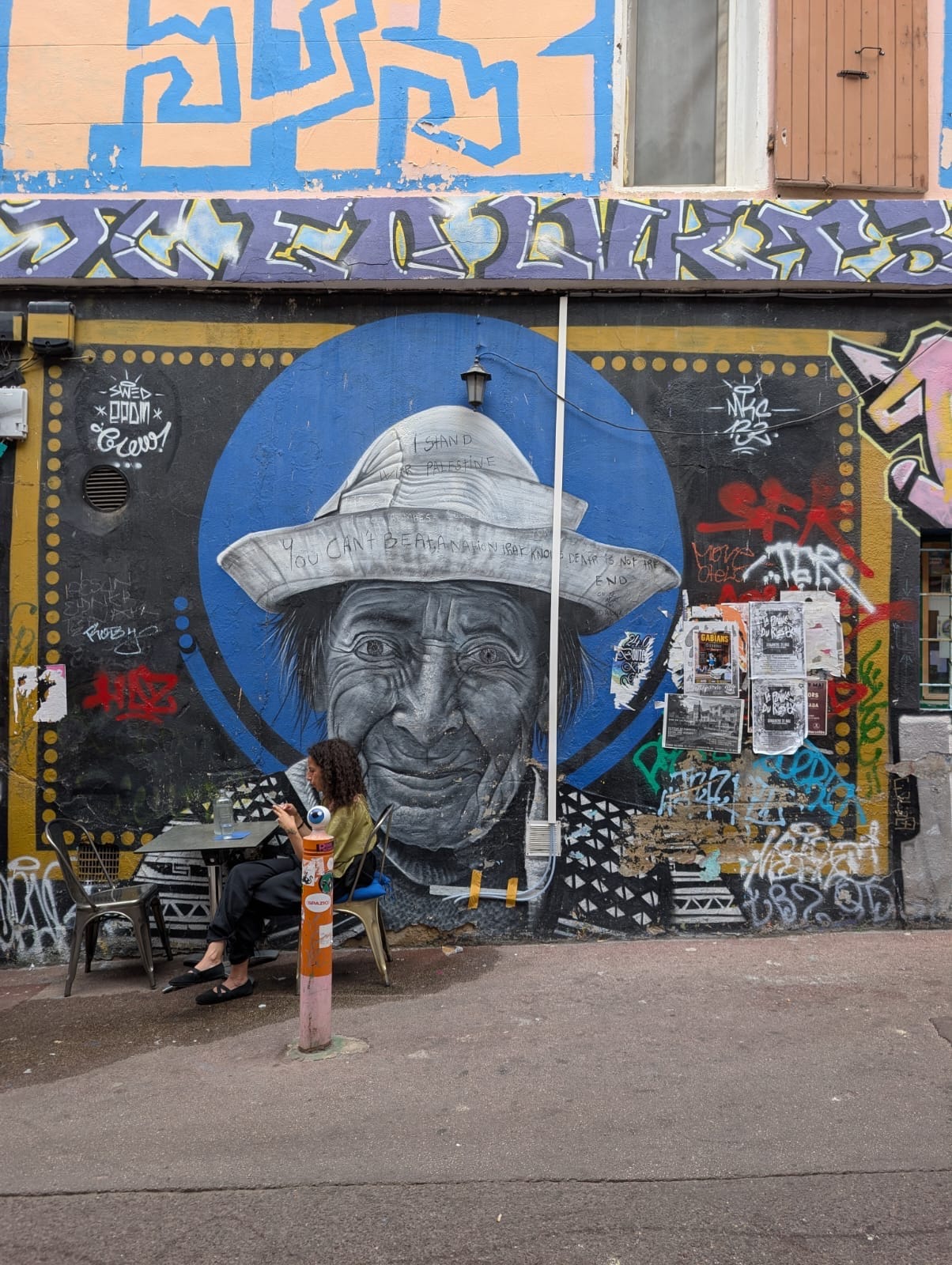
Walk up the graffiti-filled stairs to Cours Julien, famous for its street art and cool bars. On Wednesday mornings, there is also a farmers’ market here. It reminded me a bit of Hackney Wick in London.
Watch the locals play pétanque (a category of boules sports born in Provence) at Boule Carli. It is a highly social cultural ritual here! Afterward, just sit in one of the many bars to soak in the vibes.
Eat & Drink
Maison Journo: Grab a fricassée sandwich and a lemonade
Mon Bar: a classic neighbourhood bar and the perfect setting to try a Pastis.
If you’ve never had one, Pastis is an anise-flavoured spirit born right here in Marseille and the quintessential taste of Southern France. It is served with ice and water, turning into a beautiful, cloudy yellow.

If you click on the image, I’ve linked a documentary on Paul Ricard.
Pain Pan!: local bakery
La Brasserie Communale: good spot for a pint.
Limmat: great food, book in advance.
Razzia good coffee and atmosphere
Shops
Maison Empereur: A massive, historic hardware and kitchenware store. It has inevitably become a major tourist destination, but it is an absolute treasure trove.
Herboristerie du Père Blaize: historic herbalist shop
OLAB: Whenever I travel, I love hunting down local film photography shops. I bought a roll of mira.film, a French film company born in 2022.
Tangerine Marseille & La Cave à Vinyle: Two great record stores! I got super excited here because I love both French and African music, and Marseille has an incredible selection of both.
Talking about music, EVERYWHERE (and I am not exaggerating) you go here, you will hear the music of the rapper Jul. He is an absolute legend in Marseille. Not only is he the best-selling artist in the history of French rap, but he also represents a symbol of redemption and the city’s urban culture. The Marseille stadium, the Orange Vélodrome, is the temple for his biggest shows, as well as being home to the city’s other great legend: the Olympique de Marseille football club.
Not far from the stadium, architecture lovers should pay a visit to Le Corbusier’s iconic Cité Radieuse.
Le Corbusier’s legacy is immense but deeply polarising. Before leaving for Marseille, I went down a bit of a rabbit hole researching him. I don’t find this building beautiful, but the concepts behind it are absolutely fascinating when you consider the era. It was born out of the desperate urgency of post-war Europe, a period plagued by severe housing shortages and urban decay.
He famously defined the home as “une machine à habiter” (a machine for living in): a space that should respond efficiently and functionally to the needs of modern humans, much like a car or an ocean liner. To tackle the congested, unhealthy reality of early 20th-century cities, his approach was incredibly radical: raze historic centres and rebuild from scratch using béton brut (raw, unfinished concrete - which gave us the term “Brutalism”).
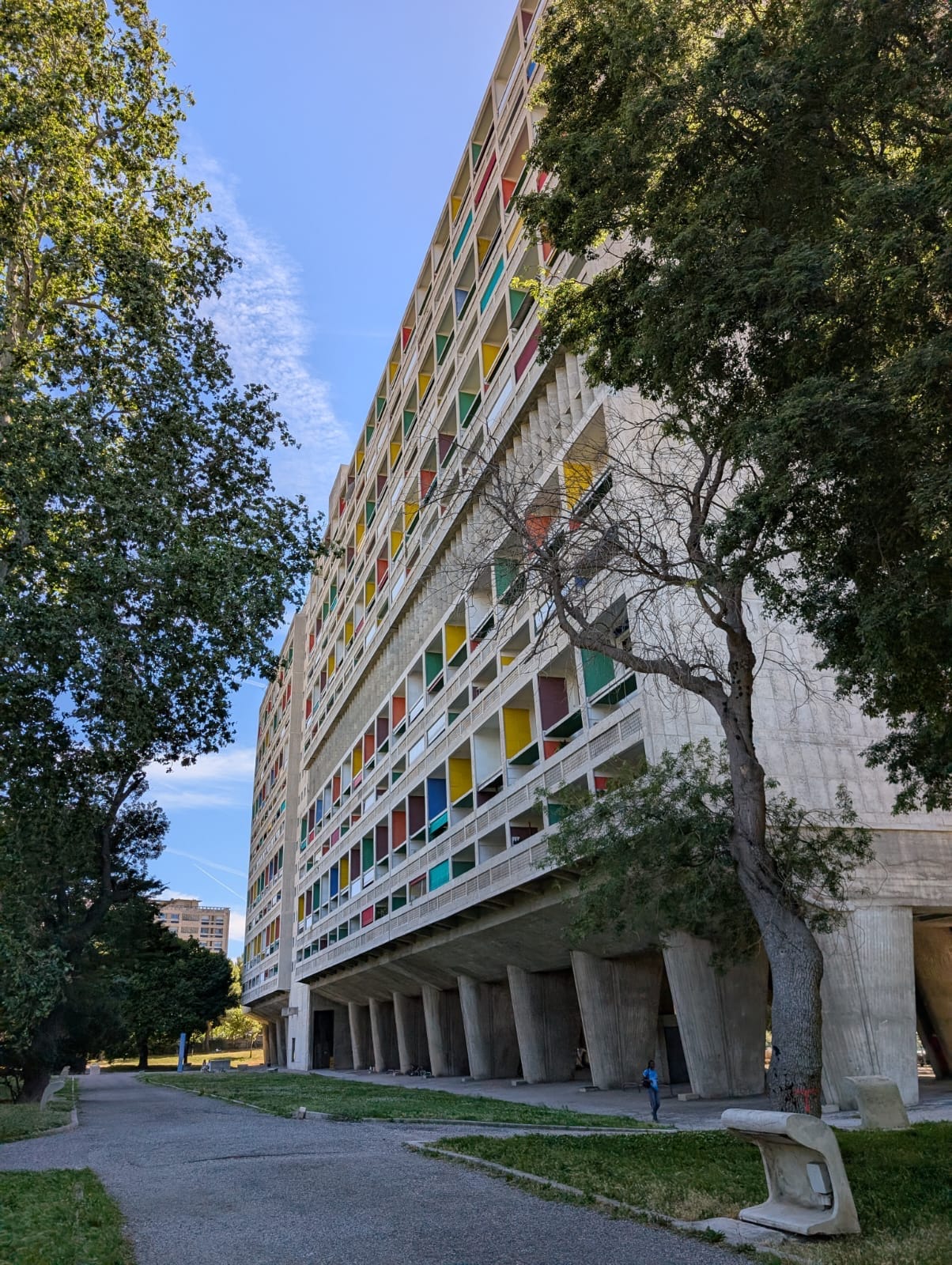
He also introduced the Modulor (1948), a system of proportions based on the golden ratio and the standard measurements of the human body (an ideal man standing 183 cm tall with his arm raised). This ensured that every space - from ceiling heights to furniture - remained on a human scale, even within monumental structures. His designs heavily prioritised light and air, orienting these massive blocks so that every apartment received direct sunlight and a view of the surrounding greenery. (His only real opportunity to apply these theories on a massive urban scale was in the 1950s when he designed Chandigarh, the new capital of Punjab in India, entirely from scratch!)
Entering is completely free. Because it is a functioning residential building, only the internal “streets” on the 3rd and 4th floors and the rooftop terrace are open to the public. If you prefer a deeper dive, you can book a guided group tour right here.
Marseille has a profound relationship with the sea, offering incredible water access right inside the city through its urban beaches. Head over to the Malmousque neighbourhood, grab a pizza from Eau à la Bouche, and find a spot on the rocks to swim at Anse de Maldormé or Anse de la Fausse Monnaie. Afterward, wander up Rue d’Endoume and pop into its lovely shops and cafes.
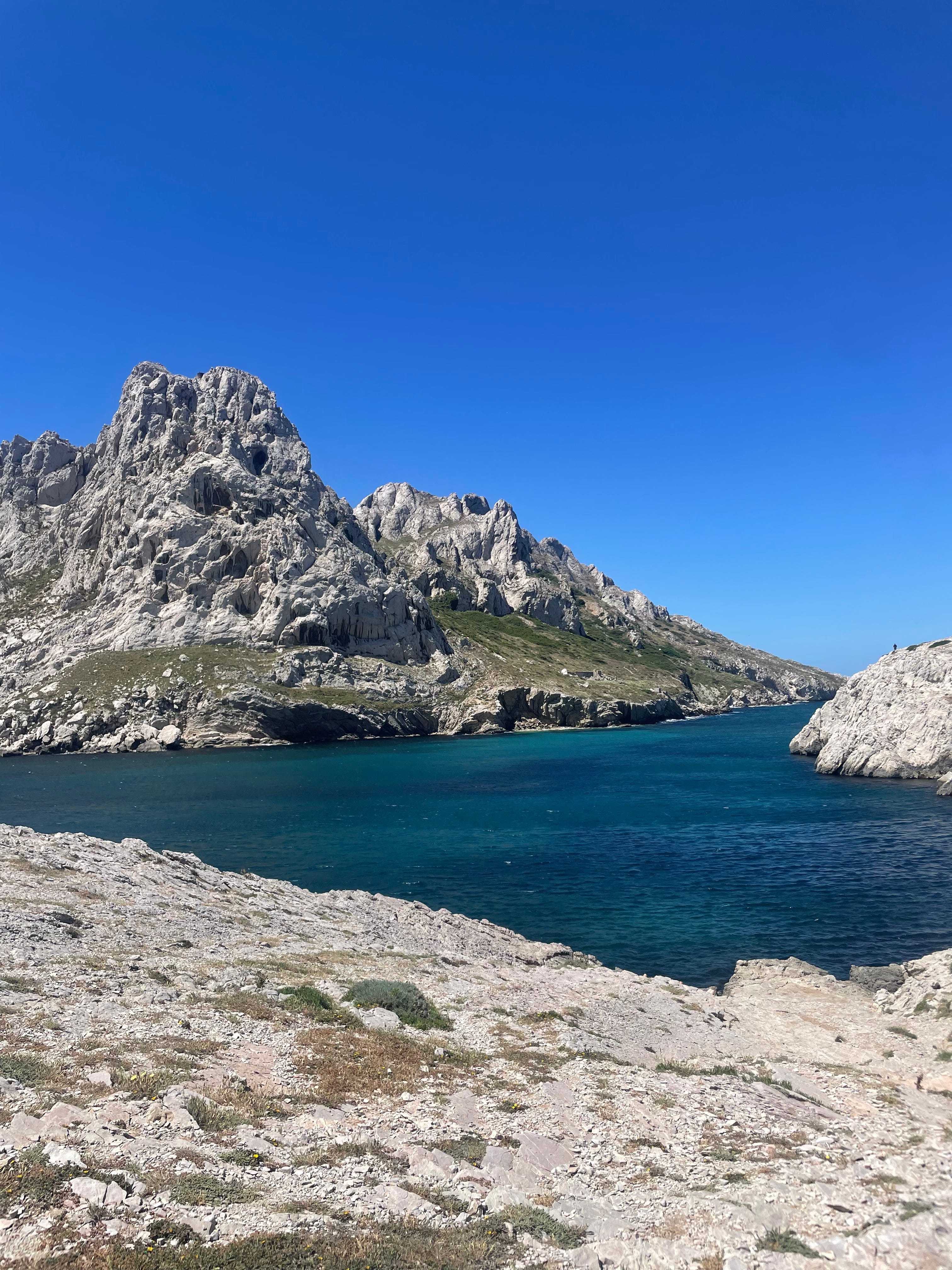
From the Vieux Port, you can catch a boat to the Frioul archipelago and the famous Château d’If. The view looking back at the city from the water is spectacular. The fortress of If is, of course, famous as the legendary prison of Edmond Dantès in Alexandre Dumas’s The Count of Monte Cristo. Alternatively, take the boat toward Les Goudes, grab a Pan Bagnat at Boissonnerie Les Goudes, and eat it looking out at île Maïre. (While the sea is undeniably beautiful, some of the modern architectural additions on the coast and the islands themselves leave a bit to be desired).
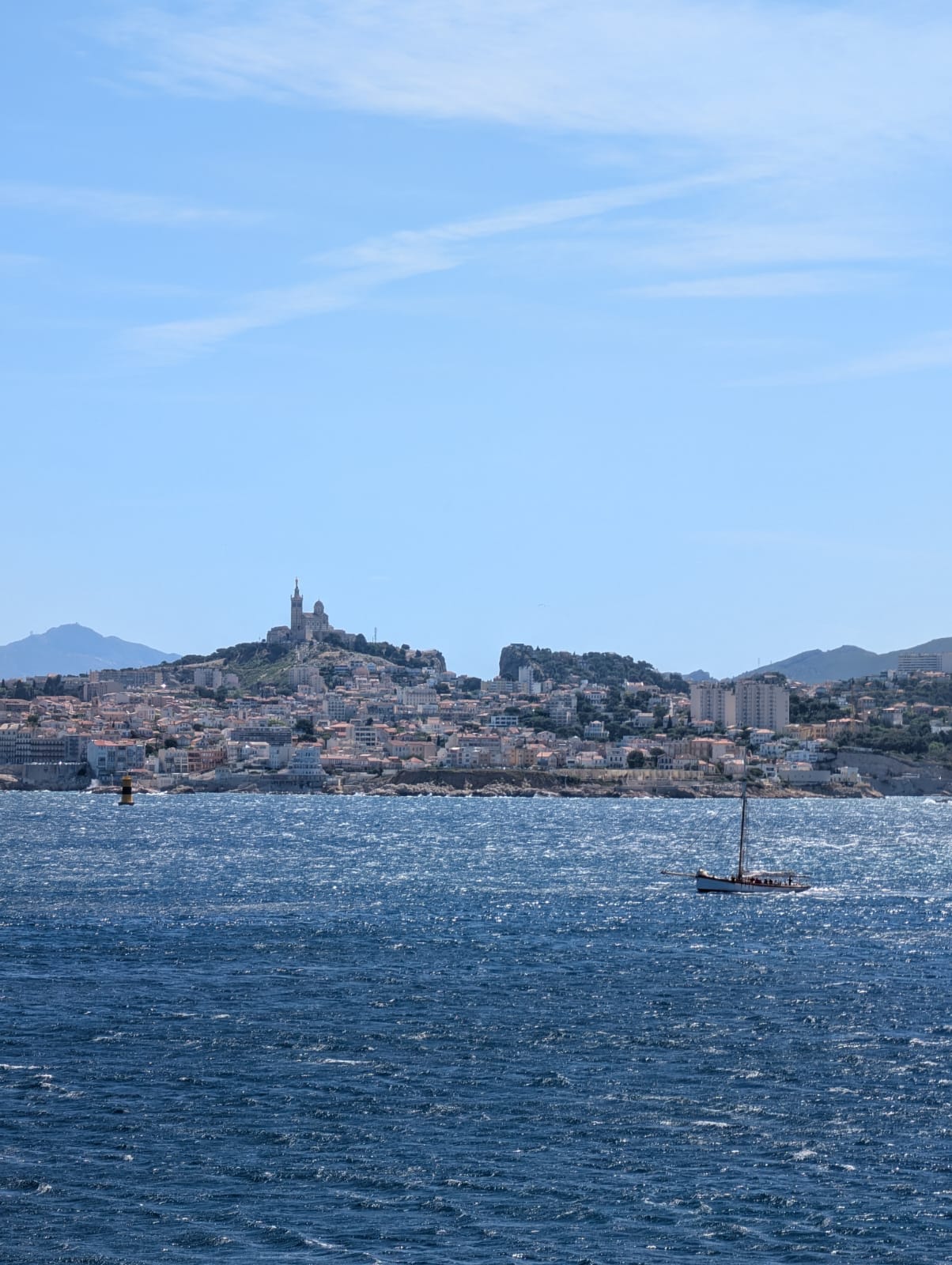
For the best view of all of Marseille, head up to the Notre-Dame de la Garde. (just take the convenient public bus, there is no need to take the tourist train!). When you step inside, look around: over the centuries, sailors and their families have left maritime ex-votos - offerings asking for protection at sea or giving thanks for a safe return.
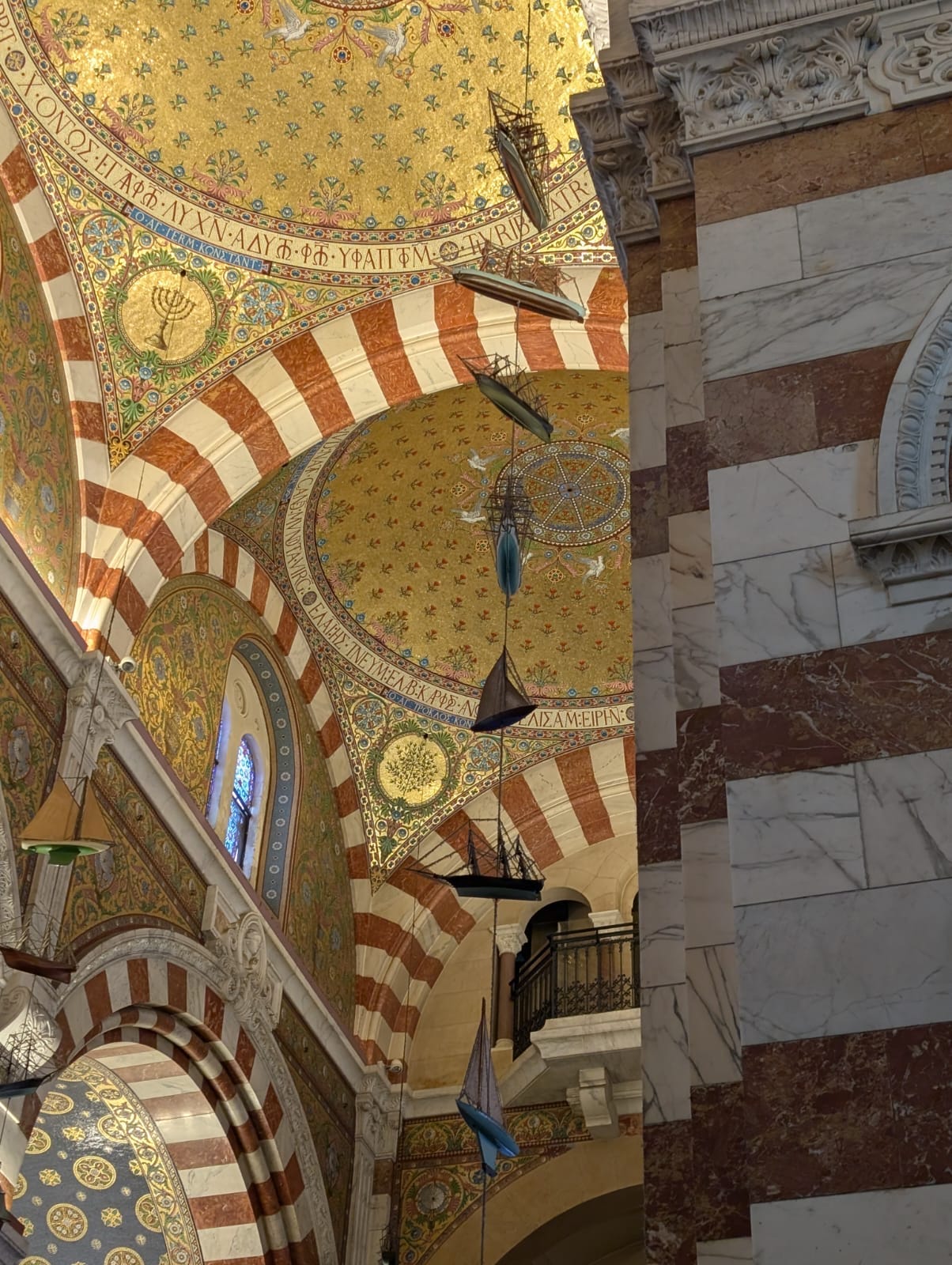
You can walk back down the hill and make a few strategic stops:
Grigne Café: A great roastery (I brought some of their coffee beans home).
Librairie Mazette A beautiful bookstore overlooking a small square set up with deckchairs - the perfect spot for a break.
Maison Payani or Chez Adèle: Perfect spots to pick up fresh delicacies or a sandwich.
You should also wander through Le Panier, the oldest district in the city. To be completely honest, it didn’t quite capture my heart, as it is unfortunately suffering from a wave of generic tourist shops, but you must still stop to see La Vieille Charité.
On the other hand, I really liked the Mucem (Museum of European and Mediterranean Civilisations) - though definitely more for its architecture than its exhibitions. The complex is made up of two distinct souls connected by a suspended footbridge over the sea: the historic Fort Saint-Jean and the modern J4 dock, which was historically the exact landing point for immigrants and foreigners arriving in the city.
Designed by architect Rudy Ricciotti (born in Algeria in 1952 to an Italian family), the new building is wrapped in a delicate, stunning concrete lacework that beautifully frames the sea. This outer shell evokes the moucharabieh typical of Arab architecture. As Ricciotti describes it, it is a “porous” building - open not only to the natural elements but also to the cultural ones and its placement within the city. Amazingly, this delicate look is achieved using a highly technical material: BFUHP reinforced concrete, which is so incredibly strong that it is typically used for nuclear power plants!
Practicalities & Logistics
Getting from the Airport: The airport shuttle drops you right at the Saint-Charles station. You can buy a return ticket (16€), or simply tap your credit card to board.
Getting Around: You can easily tap your credit card on the buses, metros, and trams, but it is worth looking into the 72-hour pass if you plan to move around a lot. Also, electric bikes and e-scooters are used by absolutely everyone here and are a great way to navigate the city.
Boats: For the maritime shuttle (La Navette) to the Frioul archipelago, you can buy tickets at the RTM ticket office right at the port. If you are heading to Les Goudes via Pointe Rouge, you can buy your tickets directly on board (they accept both card and cash). If you want to explore the Calanques around Les Goudes without being tied to boat schedules, consider renting a scooter.
How long to stay: Two nights and three full days are the perfect amount of time to soak up the city’s atmosphere, though Marseille also makes a brilliant starting point for exploring the Côte d’Azur, Provence, or the Camargue.
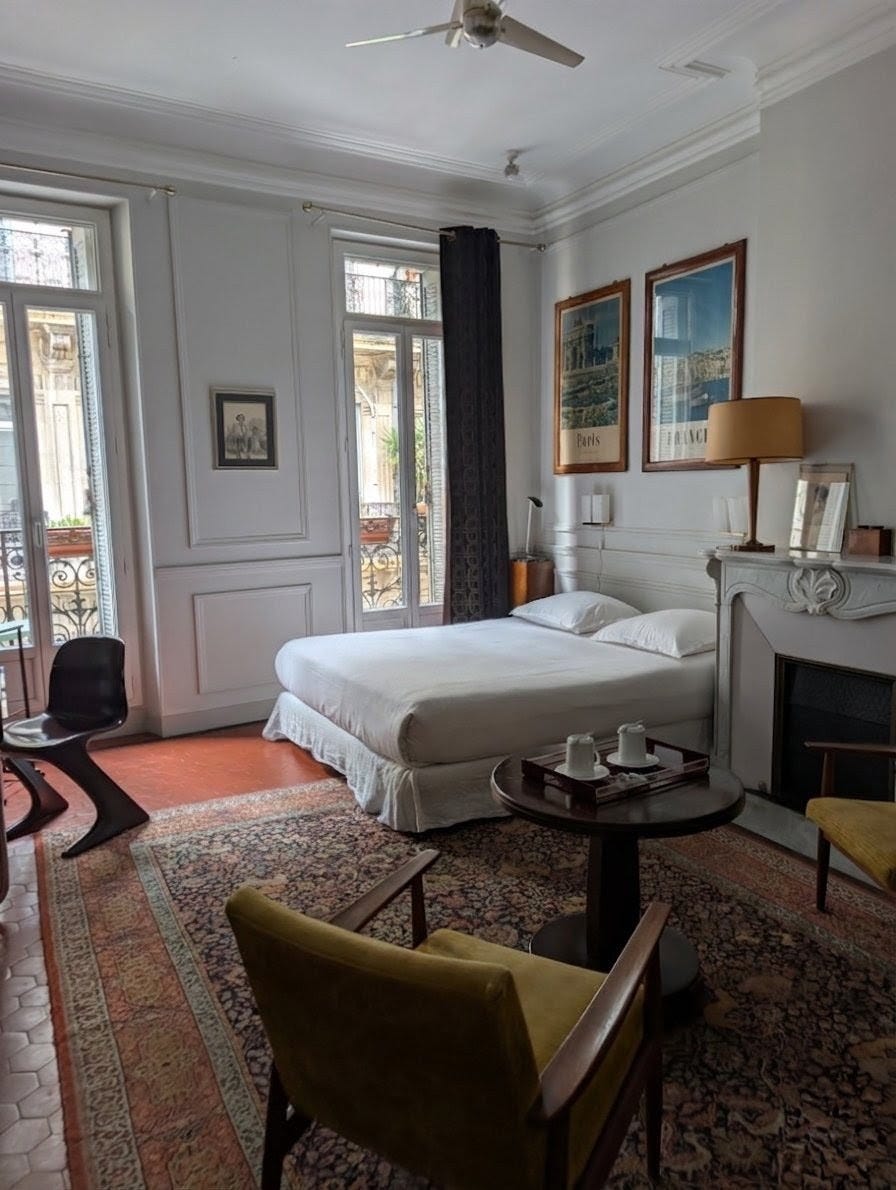
Where I Stayed: I stayed at Pension Edelweiss, a highly central, beautifully designed spot filled with antique and vintage finds, where breakfast is served on a veranda. Right next door is Boissons SOIFFE, which brews great craft beers, and Cycles Fayette, a fantastic bike shop that promotes the “Marseille–Napoli” cycling challenge connecting the two Mediterranean cities (and honestly, how cool are those vintage Peugeot bikes?!).
Don’t forget to bring home some authentic Marseille soap before you leave. I use it for everything! A true Savon de Marseille must be made exclusively with vegetable oils, bear the iconic “72%” stamp, and is never scented or brightly coloured - it should be strictly olive green or beige.
Interestingly, this iconic soap is actually the direct descendant of Aleppo soap, brought to Europe from Syria during the Crusades. The recipe found its perfect home in Provence, thanks to the region’s immense supply of olive oil and natural soda extracted from wild Camargue marsh plants.
While the rise of modern washing machines and synthetic detergents in the 1950s forced most of the glorious old soap factories to close, a few historic producers still remain. Be sure to look out for authentic heritage brands like Marius Fabre and La Corvette.
A while back, I very much enjoyed reading BANJO by Claude McKay, a novelist associated with the Harlem Rennaisance. The characters include dockworkers, musicians, sailors from all over the Black diaspora trying to survive and enjoy life in 1920s Marseilles.
So I've been wanting to visit the city for some time. This colorful post certainly does nothing to diminish that desire!
Briefly my home town many moons ago. Great to see its anarchic spirit is undimmed